FY 2025
Annual Report
Dear Friends,
What a transformative year FY 2025 has been for the Northern Virginia Bird Alliance! As we reflect on those twelve months, we are filled with gratitude and excitement for what we’ve accomplished together.
FY 2025 marked a pivotal moment in our organization’s 40-year history. In June, our members voted to adopt our new name, Northern Virginia Bird Alliance. This wasn’t simply a rebranding exercise, it was a declaration of our values and our vision for the future. We recognized that to achieve our conservation mission in an increasingly diverse Northern Virginia, we needed a name that welcomes everyone who cares about birds and nature. Our new name removes barriers and invites all voices to the table.
Shortly after, we welcomed Amanda Robinson as our first Executive Director. This represents a significant step in our organizational growth, positioning us to be more strategic, more responsive, and more effective in our conservation work. Amanda’s experience and leadership have already paid dividends as she has energized our team and strengthened our capacity to meet the challenges ahead.
This is the story of what we accomplished together this year—from bolstering our regional focus with area-wide habitat restoration and parkland symposia to completing dozens of surveys of local wildlife, from backyard wildlife sanctuaries to legislative advocacy, from educational programs reaching hundreds to partnerships building regional conservation networks. Behind every metric and milestone are people: volunteers removing invasives on Wednesday mornings, ambassadors helping neighbors create wildlife habitat, Stretch Our Park volunteers working with Boy Scouts to plant native plants, advocates testifying at public hearings, educators sharing their passion, and supporters like you who make it all possible.
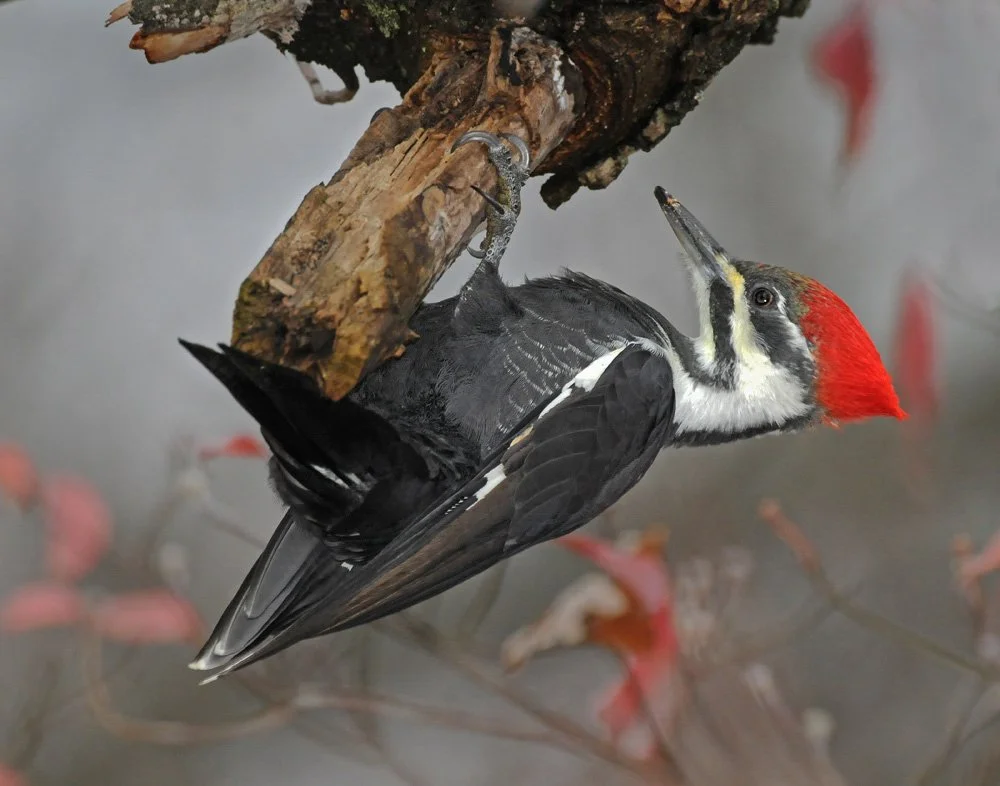
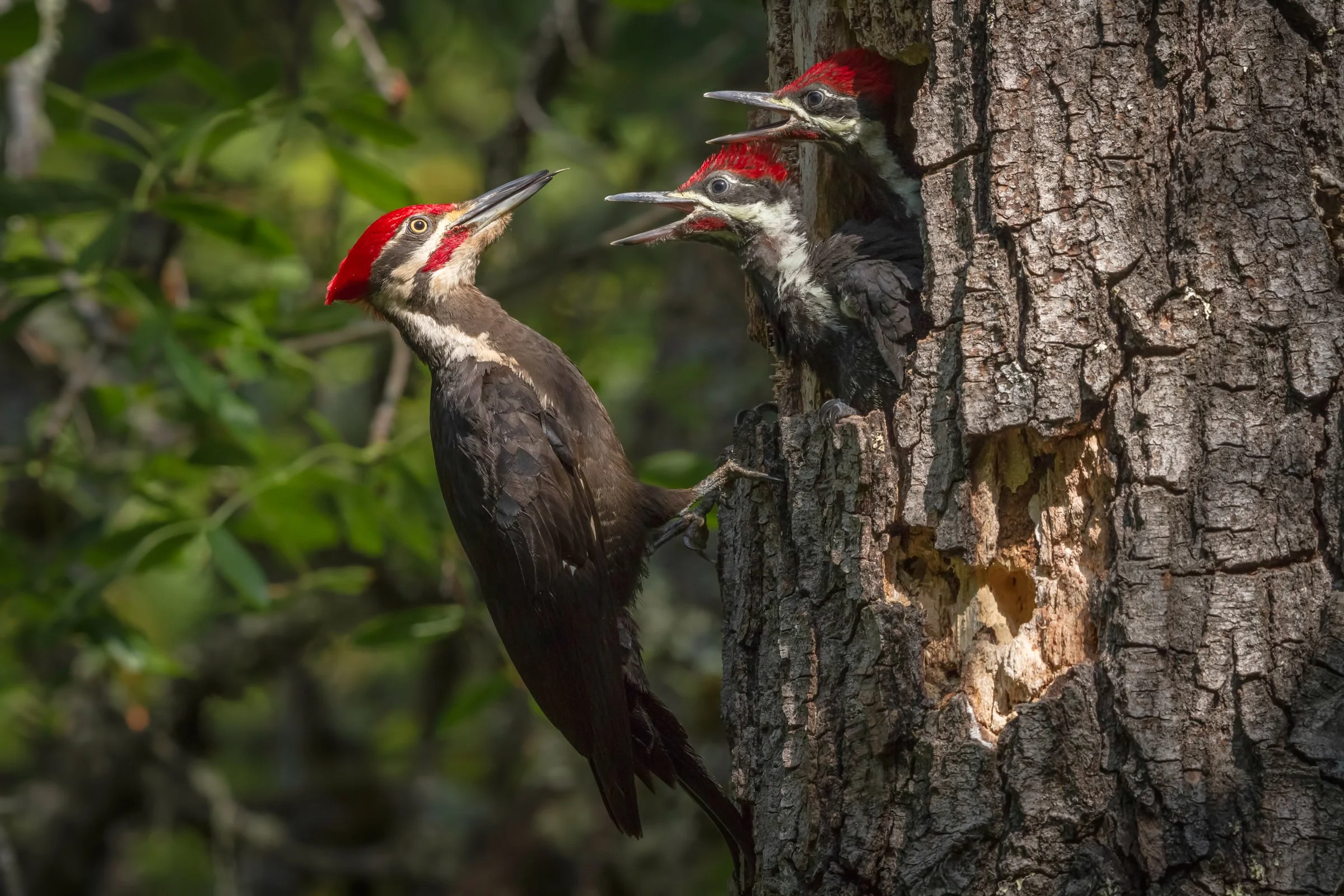
Pileated Woodpecker. Photo: Rolland Swain/Audubon Photography Awards
We’re particularly proud of the progress we’ve made in building a more inclusive conservation movement. When we look around at our board meetings, our volunteer teams, and our program participants, we see more diversity than ever before. We see younger voices bringing fresh perspectives. We see communities that have been historically excluded from conservation becoming more engaged, while acknowledging there’s plenty more to do. This matters because the challenges facing birds and nature are too big for any one group to solve alone.
Looking ahead, we know our work must continue. Northern Virginia remains one of the fastest developing regions in the country. Habitat loss reduces and fragments the landscape birds depend on. Climate change is altering ecosystems and migration patterns. But we also know that when our community comes together—when individuals transform their yards, when neighbors collaborate across boundaries, when citizens speak up for nature, when elected officials respond to public will—real change happens.
Thank you for being part of this community. Thank you for believing that what we do in our own backyards, in our local parks, and in our civic spaces matters for the future of birds and nature in Northern Virginia. Here’s to another year of enjoying, conserving and restoring nature…together.
With gratitude and hope,
Elizabeth “Libby” Lyons, President, Board of Directors
Amanda Robinson, Executive Director
Our mission is to engage all Northern Virginia communities in enjoying, conserving, and restoring nature for the benefit of birds, other wildlife, and people. We advance our mission through educational programs, citizen science, conservation initiatives, and advocacy initiatives.
We envision a world where people, wildlife, and their habitats thrive.
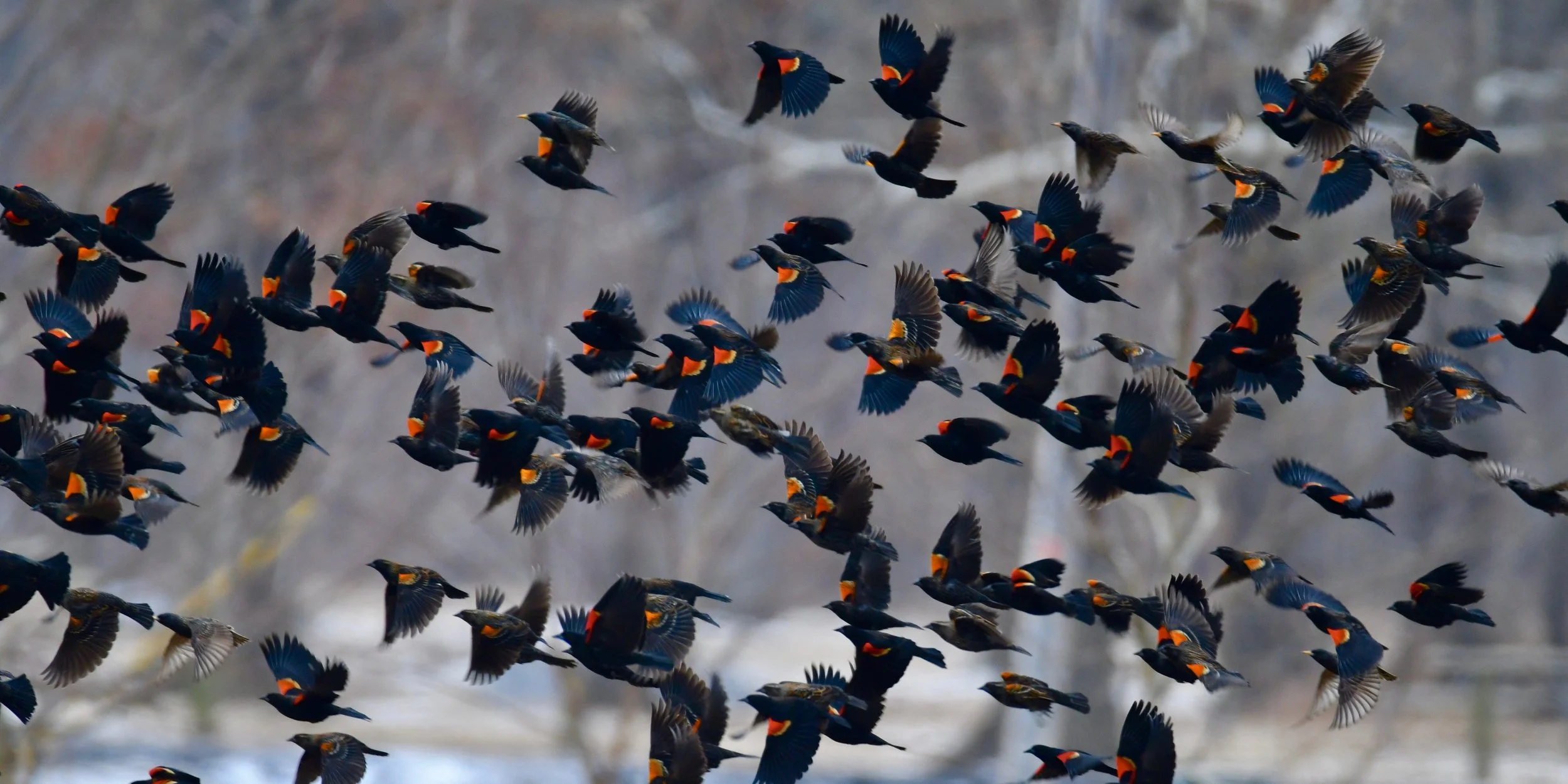
Red-winged Blackbirds and European Starlings. Photo: Amy Watts/Audubon Photography Awards
Building the Future
NVBA made strategic organizational changes in FY2025 to broaden our community engagement and increase our impact.
In FY 2025, NVBA underwent two transformative organizational changes that positioned the organization for greater impact and inclusivity.
Members voted on June 9, 2024 to adopt a new name, Northern Virginia Bird Alliance, replacing the former Audubon Society of Northern Virginia. The Board of Directors recognized that John James Audubon’s legacy of racism and scientific fraud was a barrier to many individuals, especially in younger and more diverse groups, who might otherwise join conservation efforts. The new name better communicates the organization’s mission and focus on birds while being welcoming and free of negative associations, and aligns NVBA with a nationwide network of organizations also adopting the Bird Alliance name.
Midway through the fiscal year NVBA hired Amanda Robinson as its first Executive Director. Amanda brought extensive nonprofit leadership experience from her work in climate action, education, and faith-based environmental advocacy, along with a Master’s in Public Administration from Cornell University specializing in nonprofit management.
These parallel changes reflect NVBA’s commitment to building a more inclusive and strategic conservation organization capable of engaging all of northern Virginia’s diverse communities in protecting birds and nature.
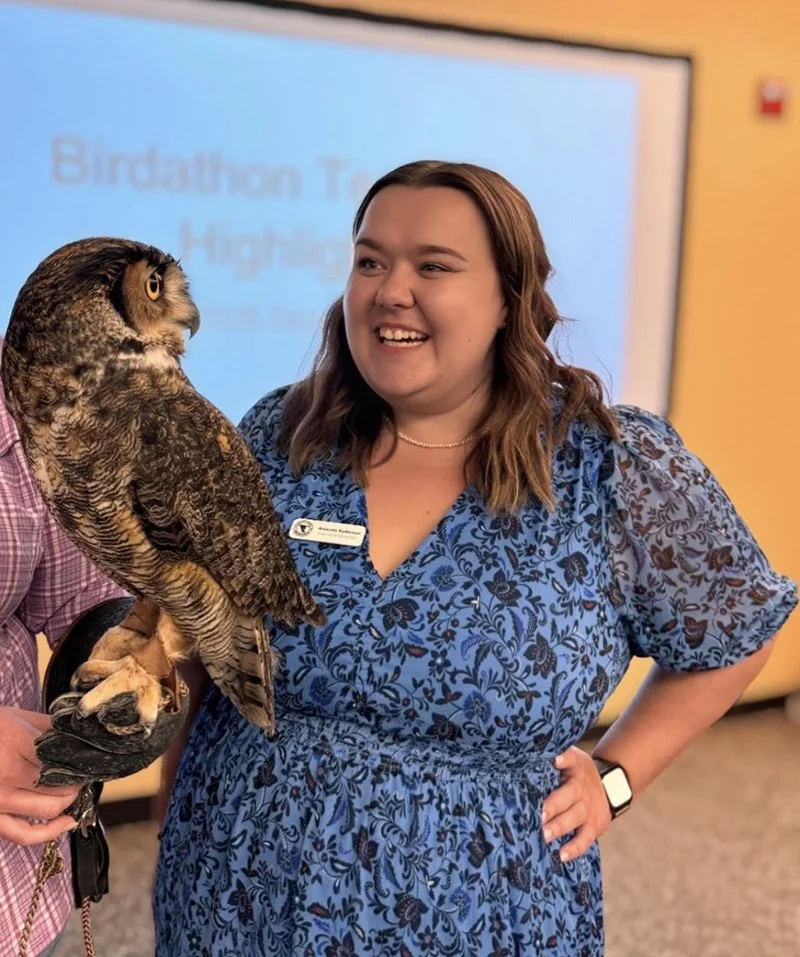
Amanda Robinson, Executive Director
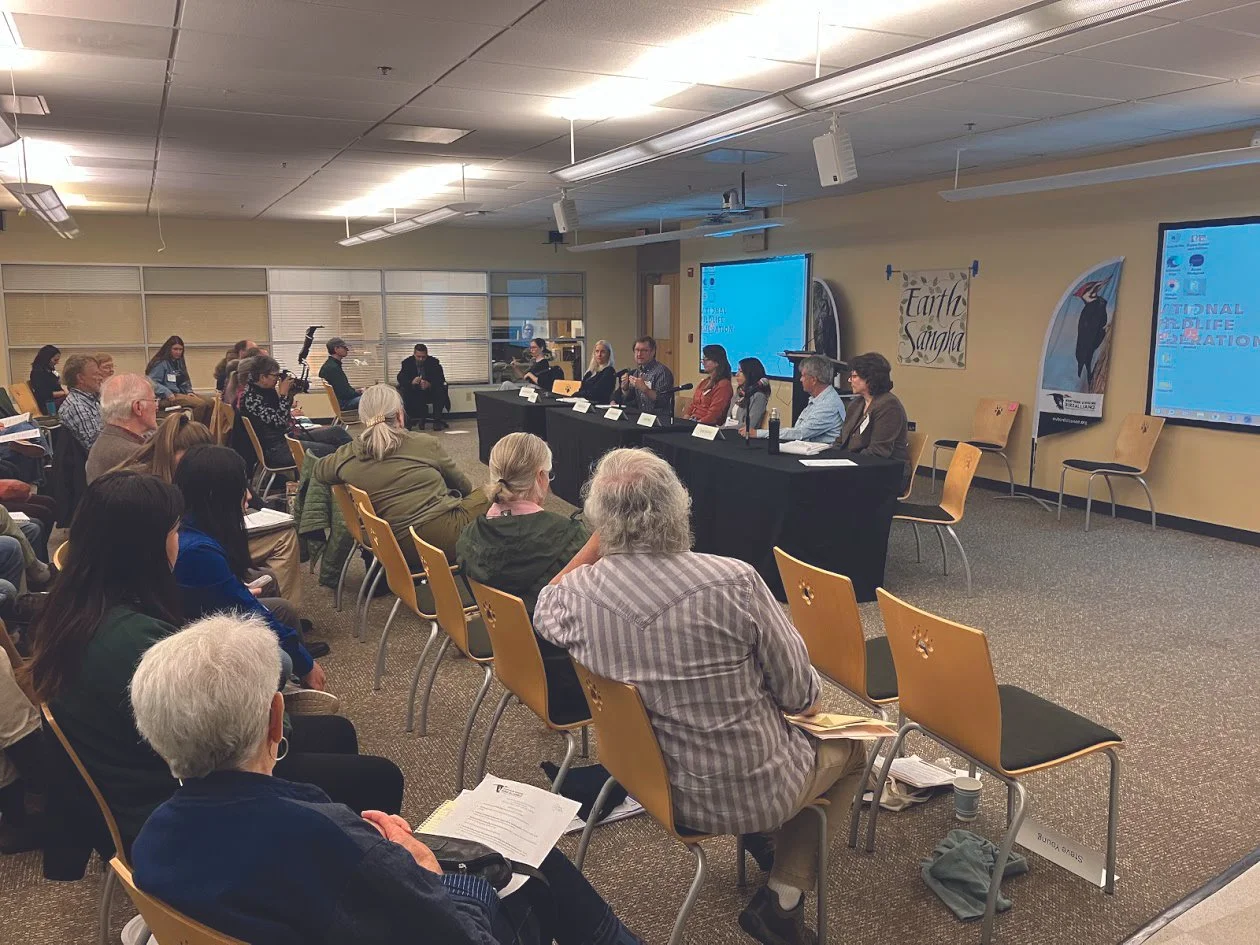
Stretch Our Parks Symposium. Photo: Tina Dudley
2025 by the Numbers
This year, as every year, our biggest numbers had everything to do with YOU

127+
wildlife sanctuary program property visit requests

3,000
Participants in Adult Education Events

200+
Registrations for Bird Safe Nova kick-off Program

112
Inaugural Stretch Our Parks Symposium Attendeees
75%
First-time Attendees at nextgen Birders for Conservation Events

11
Mini-grants Awarded for Invasive Removals
Programmatic Highlights
Our programs reached new heights this year with support from our dedicated volunteers, community partners and donors.
1
Stretch Our Parks
Regional Conservation in Action
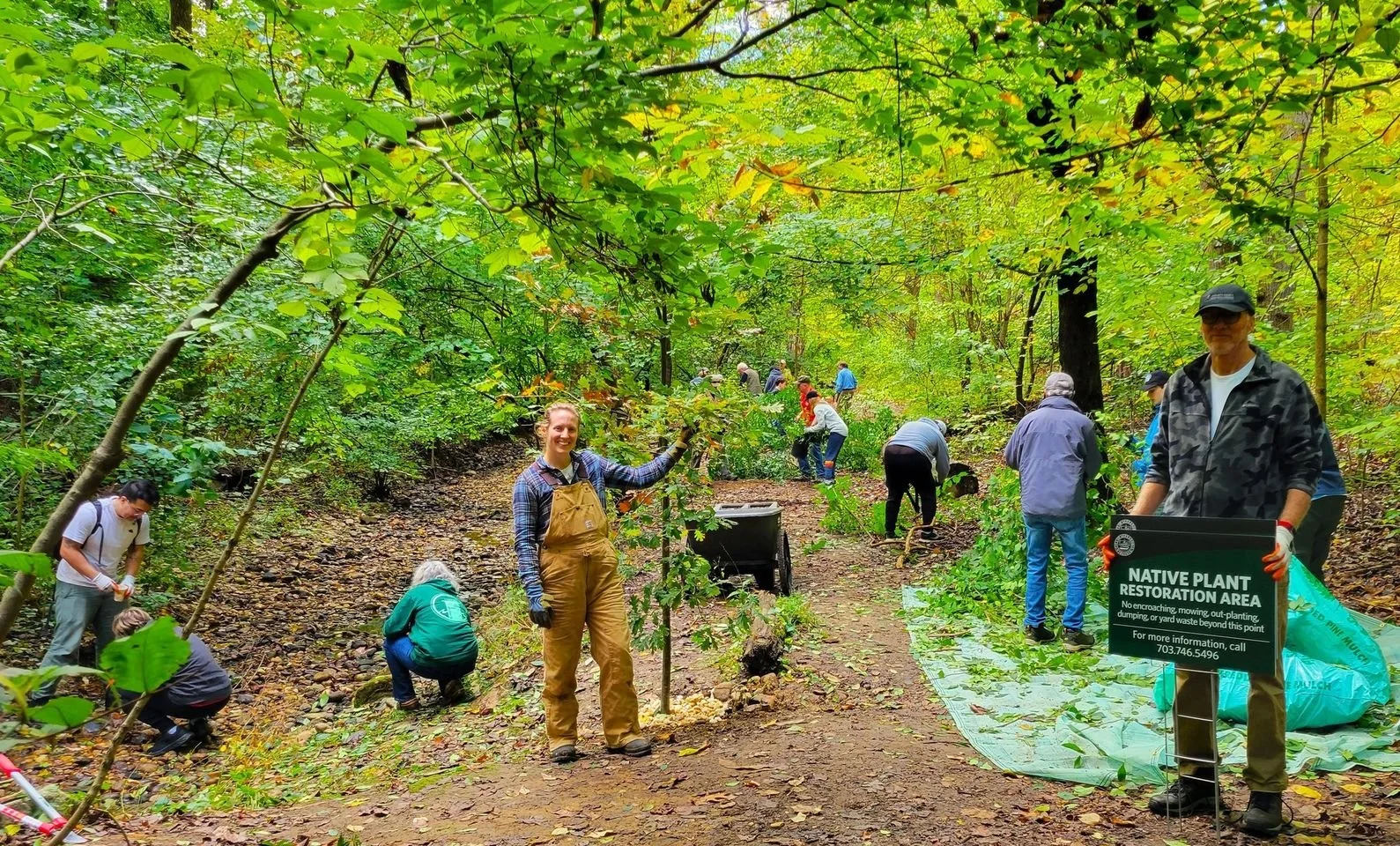
The three on-the-ground projects in the Stretch Our Parks program completed their second of three pilot years in FY 2025 and demonstrated that collaborative habitat restoration within and beyond park boundaries can effectively combat the habitat loss and fragmentation driving our region’s bird declines. These three projects (Upton Hill Corridor in Arlington, Monticello and Four Mile Run Parks in Alexandria, and Occoquan Bay National Wildlife Refuge in Woodbridge) rallied hundreds of volunteers to restore significant habitat areas, plant many native plants, engage many community groups to build social capital for wildlife protection, and partner with park authorities to help them achieve their nature-related missions.
convening regional partners
A highlight of the year was NVBA’s Stretch Our Parks program’s inaugural regional event, an in-person symposium in October focused on Habitat Restoration and Expansion in Northern Virginia which brought together 112 conservation professionals and volunteers from across the region and revealed a tremendous appetite for coordinated conservation efforts. As a follow up, we hosted a strategic virtual symposium on Innovative Models of Park Stewardship in March.
Stretch Our Parks volunteers working at Monticello Park. Photo: Libby Lyons
NVBA made significant strides during FY 2025 toward becoming a more inclusive and representative conservation organization. Thanks to support from the National Audubon Society Grant for diversity work, we deepened our partnership with Casa Chirilagua, serving Latino families in Alexandria’s Arlandria-Chirilagua neighborhood through bilingual bird walks, family nature programs, and youth education initiatives. In May, we participated in Black Birders Week with a bird walk and virtual sparrow ID event. We also celebrated diverse heritage months throughout the year (Native American, Asian-Pacific, and Latino) through articles, presentations, and programs. Our commitment to diversity is reflected in our programming reach, with approximately 50% of our 3,000 annual participants engaging with NVBA for the first time this year. Our Next Gen Birder Group alone engaged over 300 participants through 30 events and grew to a membership of over 500 individuals throughout Northern Virginia.
Wooden boardwalk. Photo: Smellypumpy via Pixabay
DIversity and Inclusion
Building a Conservation Movement for All
2
3
Wildlife Sanctuary Program
One Property at at Time
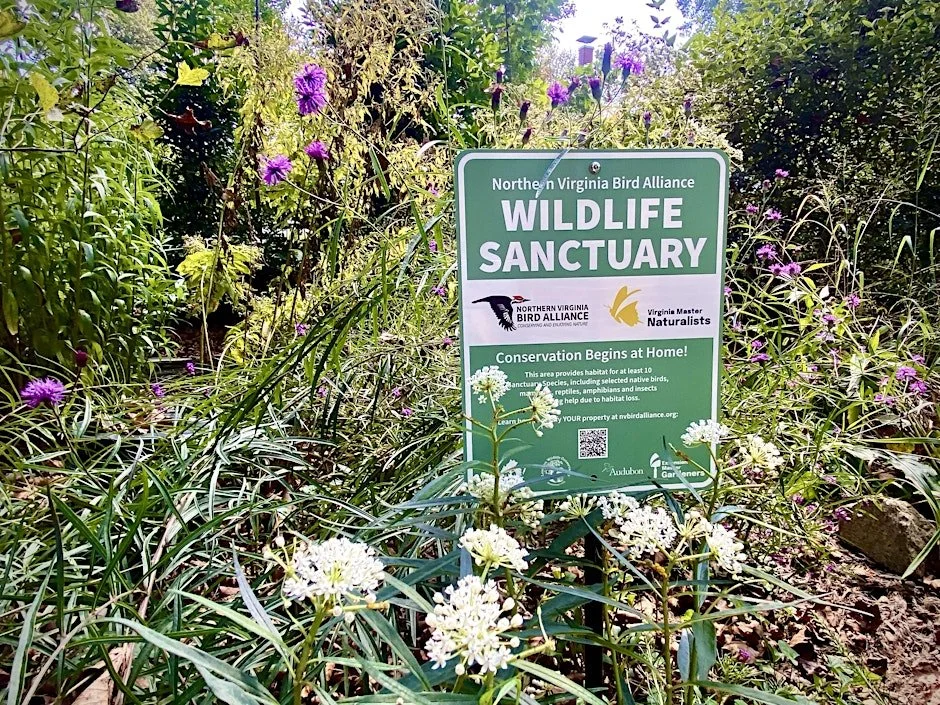
The NVBA Wildlife Sanctuary Program’s network now includes 1,222 certified properties protecting 9,090 acres across Arlington, Alexandria, Fairfax, Loudoun, Prince William, Fauquier, and Rappahannock counties. In FY 2025, the program received 127+ property visit requests from engaged homeowners, conducted 97+ site visits by volunteer Ambassadors, certified 25 new Wildlife Sanctuaries, and hosted 15+ community events. The year marked a watershed moment in our expansion of education and outreach activities. Most notable was our advocacy against broadcast mosquito spraying which involved publicizing groundbreaking research on pyrethroid insecticide impacts, launching the successful “To Spray or Not to Spray?” educational campaign, and presenting “Beyond the Spray” to packed audiences. We also publicized the “Leave the Leaves’ approach, developed new printed materials, offered introductory birdwatching for Ambassadors, and fielded WSP Birdathon Teams. In collaboration with Fairfax County Urban Forestry, we pioneered a mini-grant program that awarded funds to 11 homeowners’ associations and faith communities for invasive species removal across 10 acres. A $1,500 Transurban Express Lanes grant enabled distribution of native canopy trees and shrubs to faith communities during our October 2024 planting weekend.
Certified Wildlife Sanctuary. Photo: Alice Cisternino
Lights Out, Birds Up
Bird Safe Nova Takes Flight
4
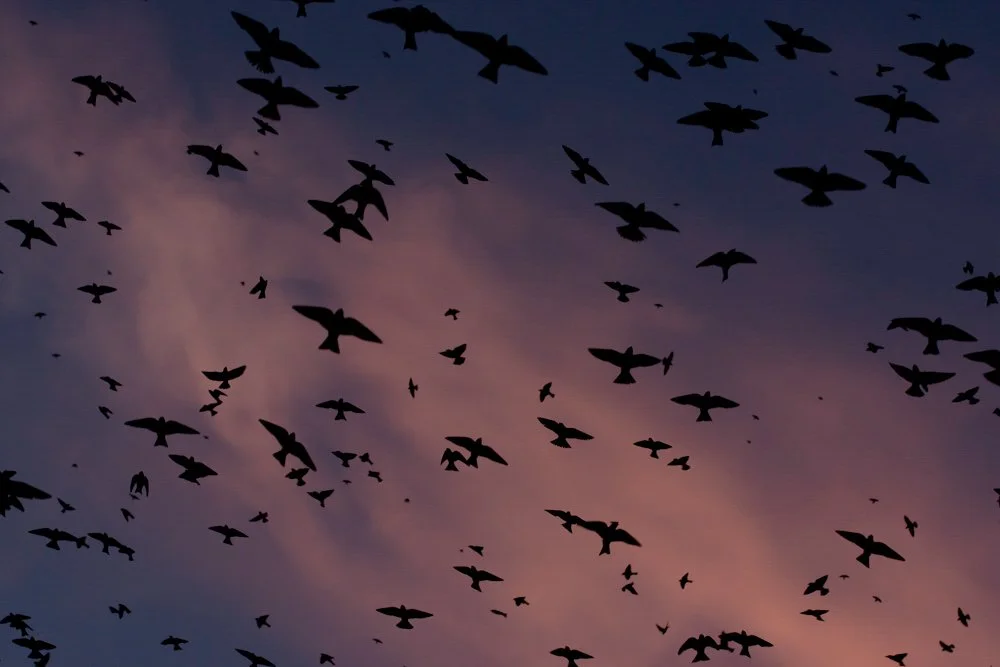
Bird Safe NOVA launched in FY 2025 as a comprehensive campaign to reduce bird deaths from window collisions and light pollution. Over 200 people registered for the October 2024 kick-off program featuring speakers on bird migration, light pollution, and collision prevention techniques. The Fairfax County Board of Supervisors unanimously approved a pledge in March directing the Office of Public Affairs to promote the spring Lights Out for Birds campaign and directing the County Executive to identify facilities where nighttime lighting could be reduced during migration. We met with seven of the ten Fairfax County Board of Supervisors members, Fairfax County Park Authority staff, and representatives from the Tysons Community Alliance to build support for the campaign. NVBA joined the Bird Collision Prevention Alliance (a national coalition of over 100 organizations coordinated by U.S. Fish and Wildlife Service) and the Virginia Responsible Street Light Coalition to advance bird-safe lighting standards across the region.
Purple Martins migrating at dusk. Photo: Keith Kingdon/Audubon Photography Awards
5
Citizen Science
Monitoring the Health of Local Biodiversity
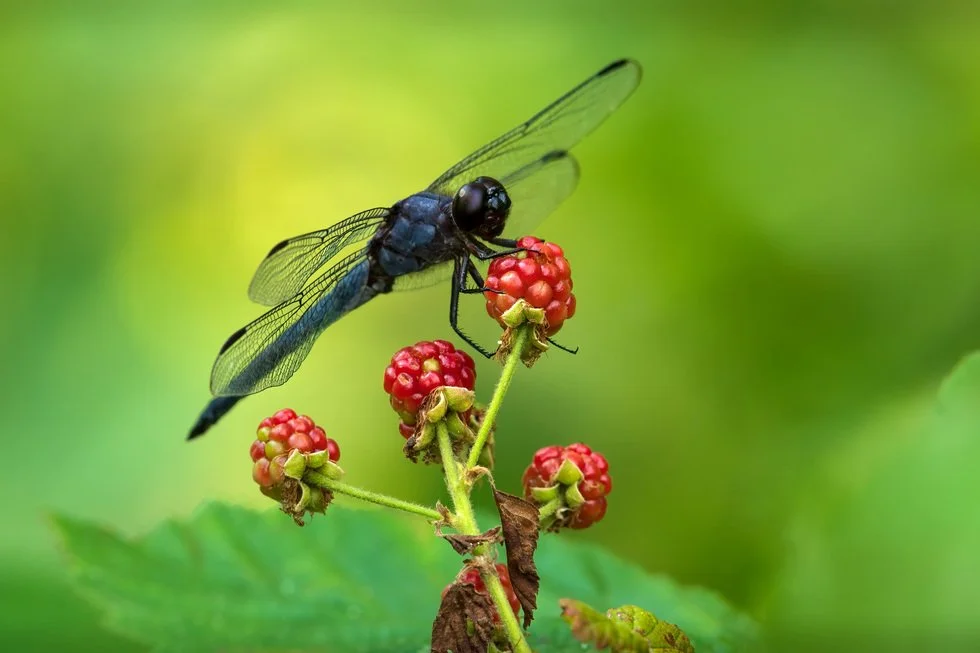
Our volunteers continue to amaze us – monitoring our local biodiversity in all weather, all year round, at all hours of the day, and across the region. Forty-seven times in FY2025 they conducted surveys of the Occoquan Bay area wildlife (and plants), which have been led by volunteer Jim Waggener for 35 years! Others braved wintry weather to undertake NVBA’s Christmas Bird Count (CBC) circle in the Manassas-Bull Run area as part of the National Audubon Society’s 125th year of the CBC! Local butterfly enthusiasts undertook two butterfly surveys in June and September, adding to the many years of data that will allow us to understand butterfly population dynamics. NVBA trained new volunteers for additional counts by offering sessions on identifying backyard birds and winter waterfowl. And in an effort to help understand the fate of local grassland birds, NVBA started a new monitoring project in cooperation with the Fairfax County I-95 Landfill, which is implementing a pioneering no-mow zone in closed areas of the landfill. Arriving at the landfill before sunset, NVBA volunteers started an 11-week survey in May to examine how grassland birds use the no-mow areas during the breeding season.
Slaty Skimmer dragonfly. Photo: Michael Garth
Financials
Financials at a Glance
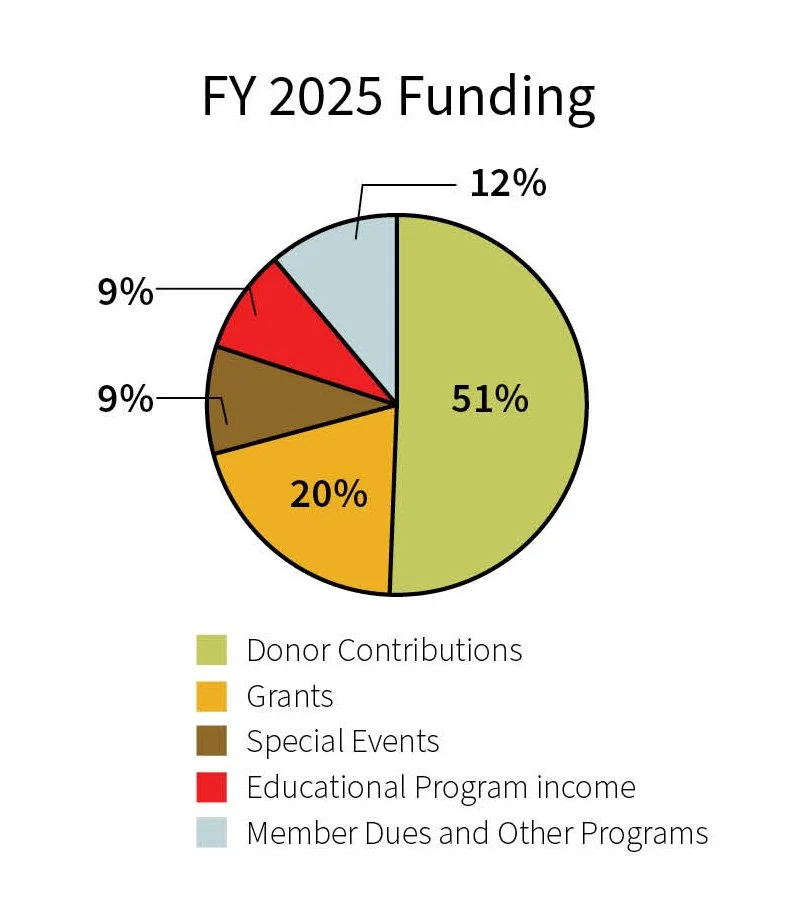
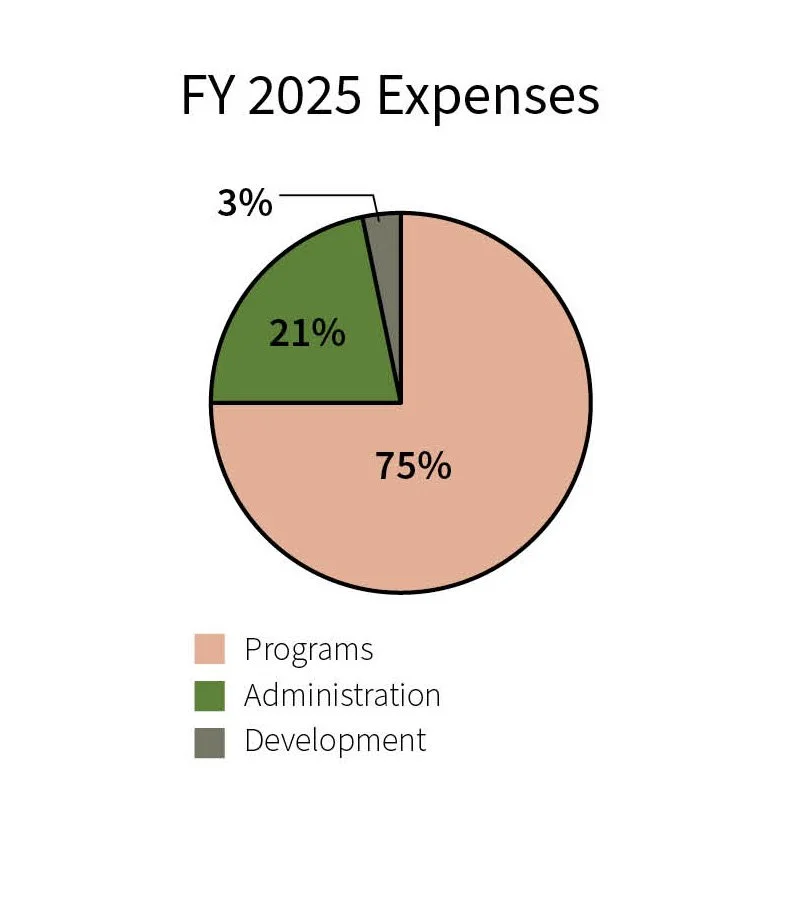
The pie charts below provide a snapshot of our categories of revenue and expenditures.
We depend on volunteers! Our expenses do not include the tremendous value of volunteer time generously given to make our programs possible. We send a big THANK YOU! to all our dedicated volunteers who plan and lead walks, make presentations, engage children, families and other community groups, contribute as Wildlife Sanctuary Ambassadors, serve on the board and committees, and perform many other important functions.
We are fiscally sound, ending the year with $547,359 in assets. These funds are held in conservative investments that earned $47,112 in dividends this fiscal year.
Donor Recognition
Thank you to everyone who has given to NVBA this year. Our work would not be possible without you!
$2000+
Anonymous
Tom Blackburn & Brenda Frank
Joanne and David Bauer
County of Fairfax
Barbara L. Francis
Ronald Grimes
Holbrook Travel
Seth Honig
Elizabeth Martin
Dixie Sommers
Wildlife Partnership Fund
$1000 - $1999
Edward and Lisa Bennett
Laura Connors
Eileen Ellsworth
Joan Haffey
Elizabeth Lyons and Alan Bornbusch
Ginny McNair
Peter and Jainel Morris
Thomson Reuters
Kim and Pete Scudera
Transurban (USA), Inc
Timothy R. Williams
Tom Wood
$500 -$999
Gerry Abbott
Christopher Biow
Sheila Brady
Deborah Brown
Larry and Ann Cartwright
Alvin and Linda Doehring
Robin Duska
David Hopkins
Deborah Hren
Kory Kaye
Pamela Keefe
Laura Kirkconnell
Jennifer Krebs
Joan Passerino and Anita Zappone
Pramik Family Foundation
Jack Russell
Eileen E. Scutt
Morgan Stanley
Melodie Sweeney-Gamble
Frankie Trull
Looking Ahead
Our programs reached new heights this year with support from our dedicated volunteers, community partners and donors.
Help us continue to move nvba forward
Your passion, time and energy are what drive us forward. Learn how you can help!
Pileated Woodpeckers. Photo: Sylvia Hunt/Audubon Photography Awards